In today’s fast-paced academic environment, children face increasing pressure from studies, social expectations, screens, and busy routines. Many students feel overwhelmed, anxious, distracted, or emotionally unsettled — even if they cannot always express it clearly.
Teaching calming techniques for students is one of the most effective ways to support their mental well-being, emotional regulation, and learning ability. When children learn how to calm their mind and body, they develop lifelong skills for managing stress, focusing better in class, and responding to challenges in healthy ways.
Below are five simple, science-backed calming techniques for kids that parents, teachers, and schools can easily introduce into daily routines.
1. Controlled Breathing — Calm the Nervous System
Breathing is one of the fastest ways to calm the brain and body. When children are anxious, upset, or overstimulated, their breathing becomes shallow and fast. Teaching them controlled breathing techniques helps activate the parasympathetic nervous system — the body’s natural relaxation response.
Popular breathing techniques for kids:
- Belly Breathing:
Children place one hand on their stomach and breathe slowly so the belly rises and falls like a balloon.
- Square Breathing (Box Breathing):
Inhale for 4 counts → hold for 4 → exhale for 4 → hold for 4.
- Physiological Sigh:
Two short inhales through the nose followed by a long slow exhale through the mouth.
- Guided Meditation Breathing:
Listening to short calming audio or teacher-guided breathing exercises.
Benefits:
- Reduces anxiety and restlessness
- Improves emotional control
- Helps children calm down quickly after stress or conflict
- Enhances concentration and classroom behavior
Just 2–3 minutes of breathing before class, exams, or bedtime can significantly improve a child’s emotional balance.
2. Stretching — Release Stress Through Movement
Children often hold emotional tension in their bodies without realizing it. Stretching helps release this stored stress and brings physical and mental relaxation.
Fun animal poses for kids:
- Cat Stretch: Rounding and arching the back
- Dog Pose: Stretching arms and legs
- Butterfly Stretch: Sitting and flapping knees gently
- Snake Pose: Lying on the stomach and gently lifting the chest
These playful movements feel more like a game than an exercise, making them highly engaging for children.
Benefits:
- Releases muscle tension
- Improves posture and circulation
- Increases body awareness
- Helps restless or hyperactive children settle down
Short stretching breaks during school hours or homework time improve focus and reduce physical discomfort.
3. Independent Quiet Work — Build Inner Calm
Quiet independent activities allow children to slow down mentally and emotionally. They encourage reflection, creativity, and self-expression without external stimulation.
Effective calming activities include:
- Journaling: Writing about feelings, events, or gratitude
- Doodling or Drawing: Free creative expression without rules
- Sustained Silent Reading: Calm reading time with no distractions
These activities create a safe emotional outlet, especially for children who struggle to express themselves verbally.
Benefits:
- Improves emotional awareness
- Builds self-regulation and patience
- Enhances creativity and cognitive development
- Reduces dependence on screens for relaxation
Just 10–15 minutes of quiet independent work daily can significantly improve emotional maturity in students.
4. Grounding Technique — 5-4-3-2-1 Method
Grounding helps children come back to the present moment when they feel anxious, overwhelmed, or emotionally overloaded.
The 5-4-3-2-1 grounding method:
Ask the child to name:
- 5 things they can see
- 4 things they can touch
- 3 things they can hear
- 2 things they can smell
- 1 thing they can taste or feel inside
This technique gently shifts attention away from anxious thoughts and into the senses.
Benefits:
- Reduces panic and overthinking
- Helps children regain emotional control
- Improves mindfulness and attention
- Useful during emotional outbursts or before exams
It is especially helpful for children experiencing anxiety, sensory overload, or big emotions.
5. Walk in Nature — The Healing Power of Outdoors
Spending time outdoors has a powerful calming effect on children’s brains. Nature reduces cortisol (stress hormone) levels and increases feelings of happiness and calm.
Even a short walk in a park, garden, or green area can:
- Improve mood
- Reduce anxiety and irritability
- Enhance creativity and attention
- Improve sleep quality
Nature walks combined with observation — noticing birds, leaves, clouds, or flowers — further strengthen mindfulness.
Why These Calming Techniques Matter?
Teaching children how to calm themselves is not just about reducing stress — it is about building emotional intelligence, resilience, and lifelong mental well-being.
Children who practice calming techniques:
- Cope better with academic pressure
- Develop stronger emotional control
- Build better relationships with peers and teachers
- Perform better academically due to improved focus
Schools and parents play a critical role in integrating these habits into daily routines — morning assemblies, classroom breaks, homework time, and bedtime routines. Follow for more.



 Parent Login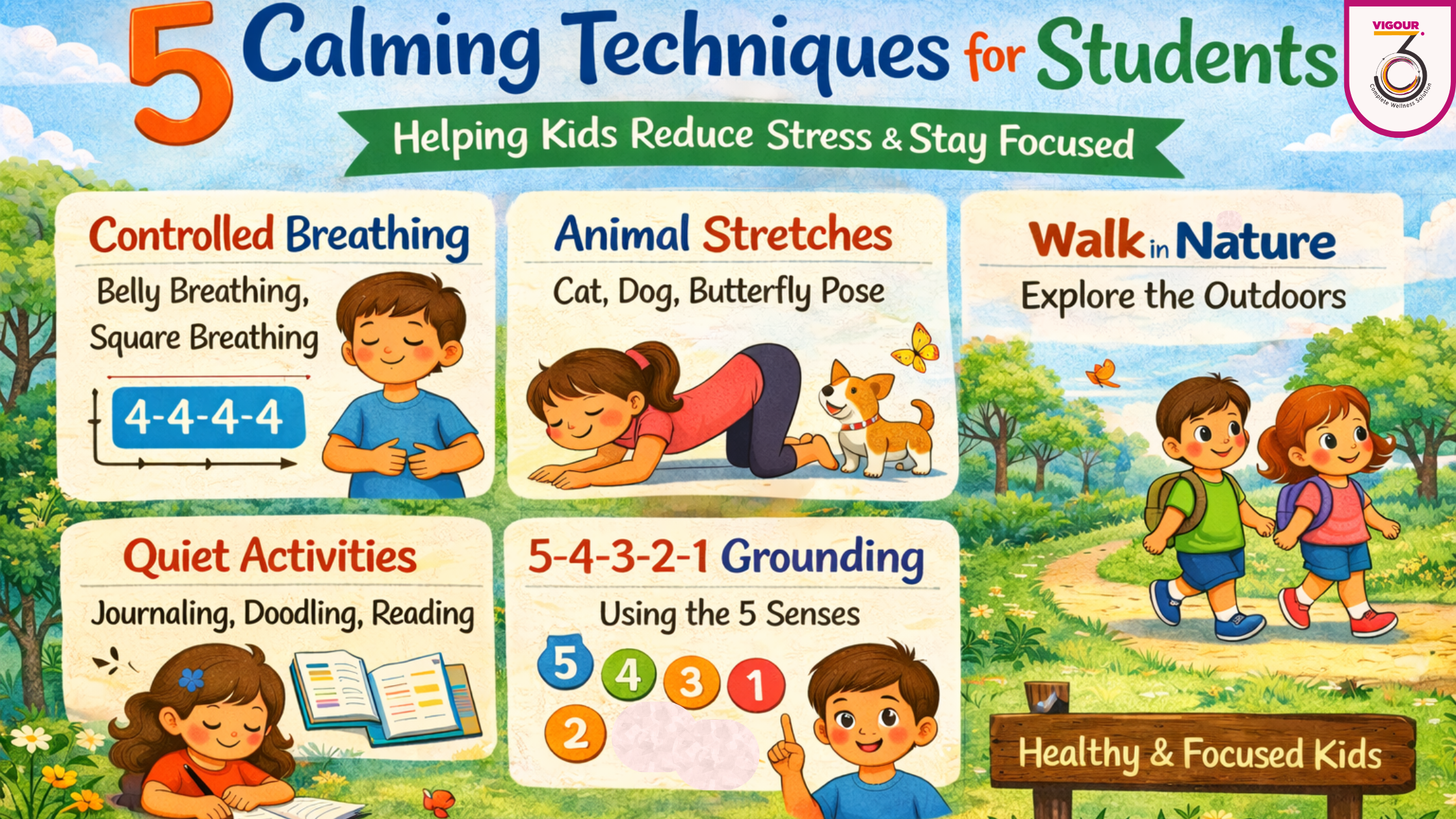
Comments (0)